Hip-hop is all about community. Supporting each other, working together, pushing each other’s boundaries and growing together. It’s also about competition – against each other, against another crew, against the world. You have to be extremely humble, honest and brave to set yourself up to battle, to put yourself out there and potentially fail so publicly. But by failing we can learn, we can develop, grow and accept our weaknesses, to build on them, and become stronger and more creative. Here is where it’s vital to have people around to nourish and to be honest with you, to encourage your growth and help you lick your wounds.
I was lucky enough to be a part of the Cardiff Bboy scene at a time when it was strong – when a regular training session once a week, brought together bboys from different crews, to train together, sort out their differences and build. Over the years I have, for many reasons pulled back from training, and my focus has been more on painting. Recently though, I have more of an urge to dance again, thanks to Rachel Pedley (Avant Cymru). It’s refreshing to train with somebody whose approach is so different to mine. Her background is in theatre, ballet, contemporary and Hiphop dance and so there is no pressure for my movements to be strictly ‘bboy’. My focus has also moved away from battles which has also taken away that pressure.
Cardiff has a reputation for its Hiphop scene being well integrated – bboys, dj’s, writers and rappers all rubbing shoulders at nights out. Again I’m slightly removed from this scene now, but somebody who is pulling it all together again for me is Rufus Mufasa. She has somehow managed to get me to perform lyrics publicly – something I never thought would happen, even though I’ve been writing since I was a teenager. Her solid reassurance at pushing boundaries has given me the support I’ve needed to create in new ways, and to trust my instincts and follow my heart. I’ve also felt brave enough to try new things in public without being scared of messing up – my foray into loop pedal use has been bumpy, but we’re getting there. Hiphop is so much more than any of us realise, we just need to be open and allow the culture to be open – Hiphop is based on play and experimentation.
Collaborating with other people is truly important to me at the moment. As well as linking to paint walls, I’ve also started linking with other artists on canvas. This gives a bit more time and headspace to think things through, and work more closely together, which can translate to a closer creative partnership on the wall. As well as working in this way with Sadsak, I’m collaborating with Rosie Skribblah, who is also schooling me on the ‘art’ world from which I have always felt so far removed.
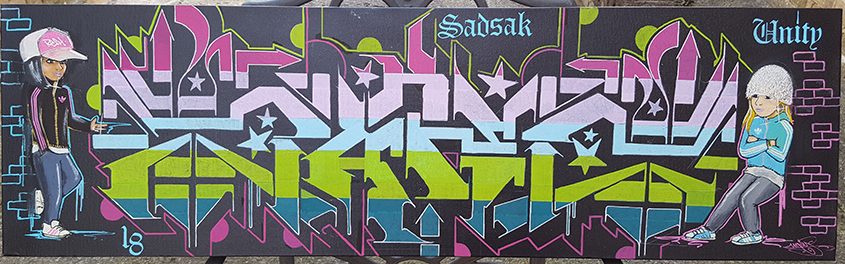
Opening up more as an artist has brought me so many more opportunities. The next few months I have loads coming up – new collabs, shows and performances, and so many wonderful people to meet and share with.
You can catch me and/or my work at:
1×1 Art Exhibition (Aures London), 23rd February – one night only! 6pm-12am, Leake Street Arches, Leake Street, London
An expanded view of drawing (Arts and Education Network), 5-26 March, Riverfront, Newport
International Women’s Day Swansea exhibition (Women’s Arts Association), 8-19th March, Cinema & Co., Swansea. I’ll be showing a collaboration with Rosie Scribblah. For the opening event on the evening of Thursday 8th, Myself, Rufus Mufasa and Rachel Pedley (Avant Cymru) will be performing.
International Women’s Day Cardiff exhibition (Women’s Arts Association), 3rd-23rd March, Llanover Hall, Cardiff. Myself and Rufus will be opening the exhibition on Friday 9th 6.30-8.30pm.
International Women’s Day Barry exhibition (Women’s Arts Association), 3rd March-28th April, Art Central, Barry. Opening event Saturday 10th.
Piano’s for High Street/ Station to the Sea (Higher Street International & Volcano Theatre), 28th March, Swansea Station. This collaboration with Mark and Nazma (Higher Street), will see the decoration of a piano and a new performance with Rufus, based around the history of the pottery used to decorate it.
Tongue Tied (Write a note), 6th April, 7-10pm, The Talking Heads, Southampton. Me and Rufus will be performing extracts from our ‘Landmarks’ installation.
Affordable Street Art Fair (Peaceful Progress), 7th April, 5pm-12.30am, The Boiler House, Cardiff. I’ll be showing new work alongside Sadsak and other contributors to Cardiff’s Street Art and Graffiti scene.
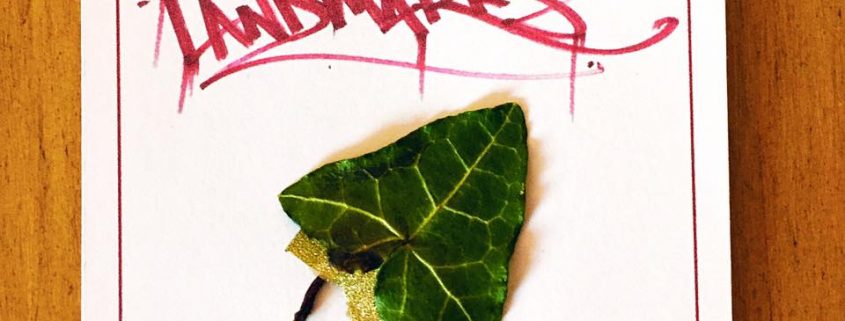
Landmarks (Maindee Library), 21st April, 4-5.30pm and 7.30-9pm, Maindee Library, Newport. £5/ £3 concessions. This installation, by myself and Rufus Mufasa, was first shown at Made In Roath Festival, with thanks to Articulture. ‘Landmarks’ explores ‘nature’ – words including acorn and ivy that have been removed from the Oxford Junior Dictionary. For this edition we will be collaborating with Marion Cheung, whose ‘Lost Connections’ paintings also inspired the content for ‘Landmarks’.
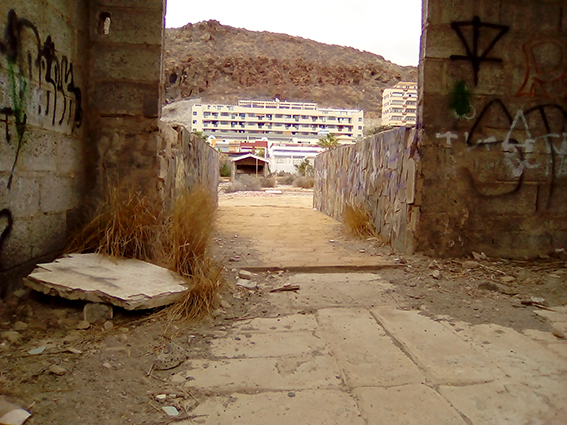
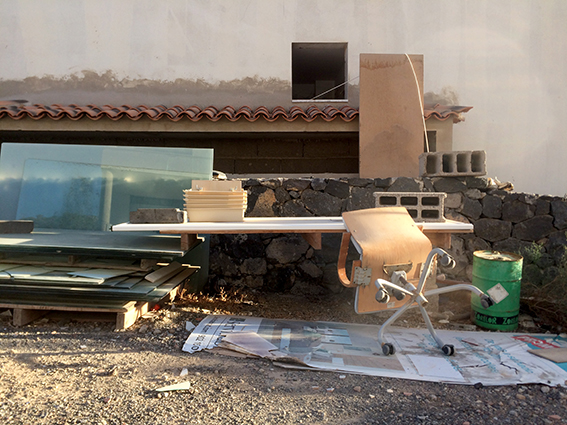 I convinced a security guard for one of the incomplete apartment buildings on the outskirts of Palm Mar to let me look around one of the blocks, which had been started in 2007, and who knows when it will be finished – apparently the lack of movement is due to money and politics.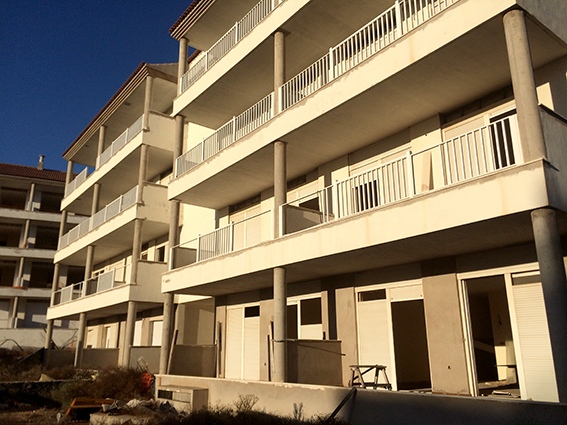
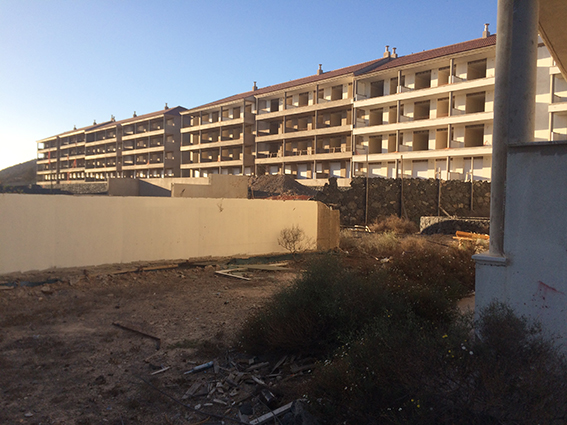 There are empty buildings all over the island, not only half-built, but ones which had once been in use and fallen on hard times, now left to crumble. Yet alongside these, there was a flurry of new building work happening elsewhere in the town, a strange juxtaposition.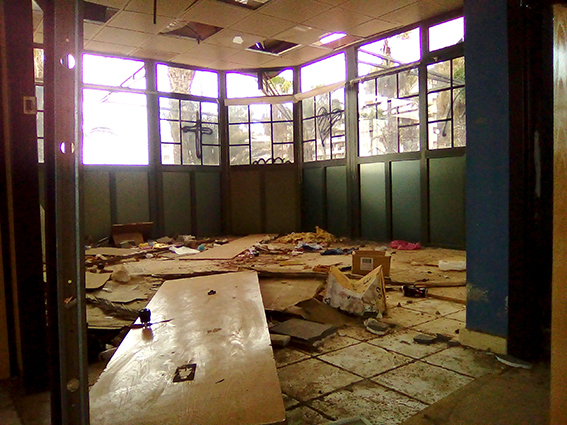
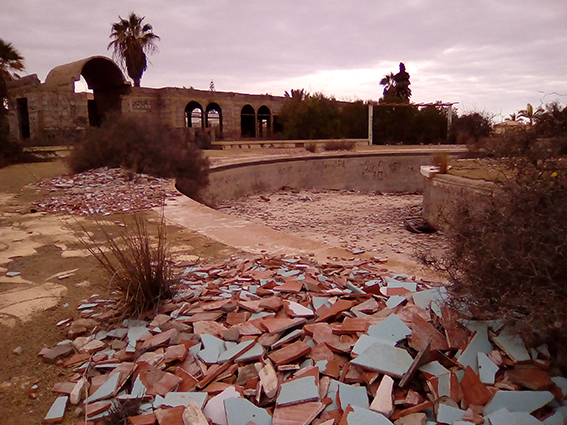
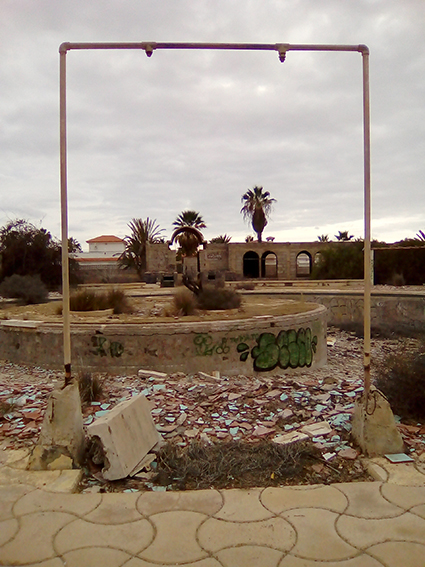
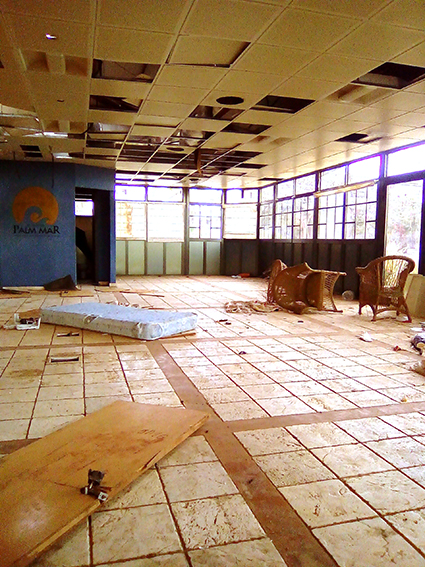
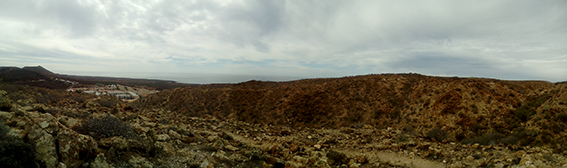
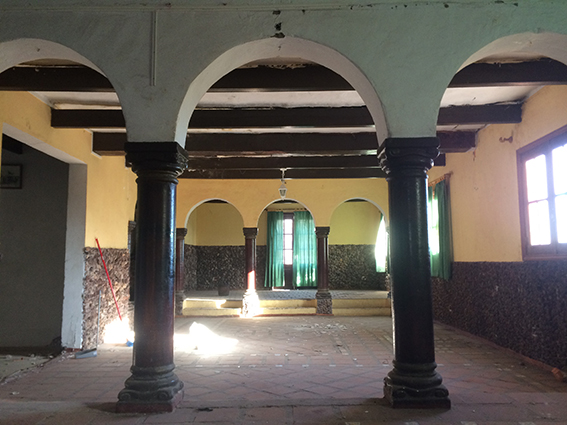 The only bars and restaurants I came across felt as though they were only for tourists. This strange atmosphere isn’t something I’ve experienced before, usually holidaying in our camper van on the coast of Wales, or visiting family in Spain. My wandering uncovered no local shops or culture, but lots of abandoned buildings, both in the town and on the mountain.
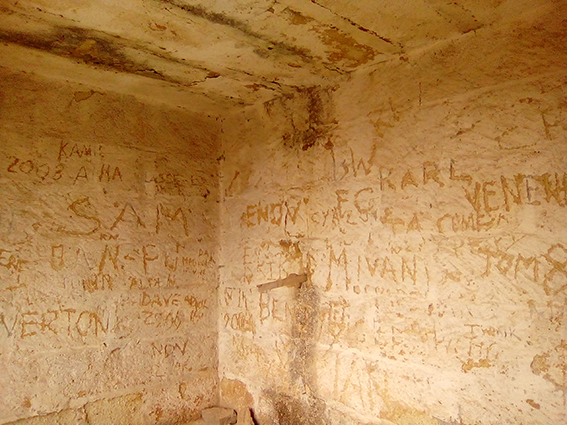 A week wasn’t long enough to fully explore, and I’m leaving feeling relaxed and rejuvenated, but uncomfortable about the unsustainability of this kind of tourism. I believe there have been some changes to laws around development here, which may impact on the ‘vibe’ of the tourist resorts, but for now, the German Tapas and British pubs reign free.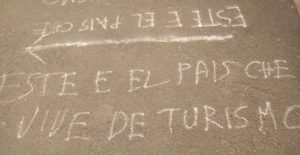
 Check out the walls page to see some pieces from this holiday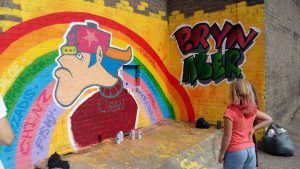
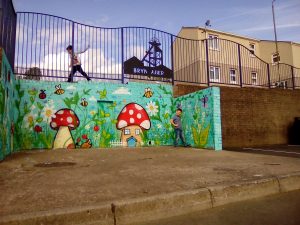
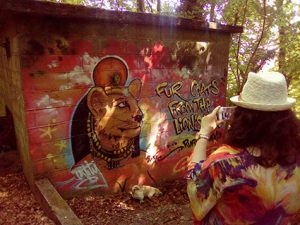
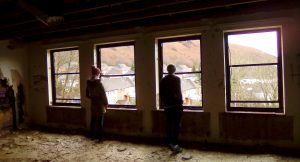
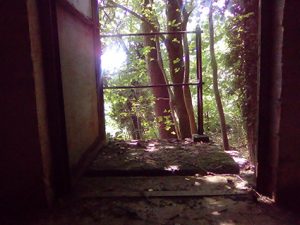 An abandoned building with potential to become a site-specific performance stage was our starting point and we put words on paper, paint on wall and talked about ideas for sound creation.