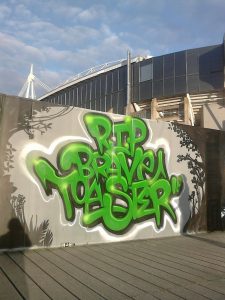
For a long time community groups and organisations including the police, probation, schools etc. have seen the potential for utilising spray-paint and ‘graffiti’ art for engaging communities. Very often though an artist will be employed for a very short space of time, and will drop in, and drop right back out again at the end of the project. If graffiti is to be useful in providing an alternative path there needs to be sufficient thought about the bigger picture.
Whenever I’m asked to do a workshop, I begin questioning… Why? What will happen when I’m gone? Who else is involved? And most importantly, what is the context – what’s the local graffiti scene like?
Writing graffiti gives a voice. It adds colour and character where there was none before. It makes people ask difficult questions – Who did that? Why?
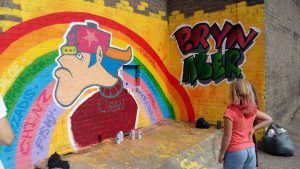
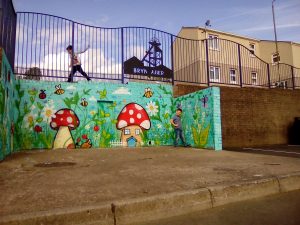
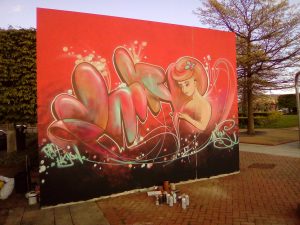
When working in a community it’s important to involve local people as an integral part of the process, so that they can carry on once I’ve left. And I’ll ALWAYS push for a legal wall, to provide an alternative to illegal graffiti. Legal walls allow development of skills and techniques, a place to learn and grow, and a place to meet and connect with the wider community.
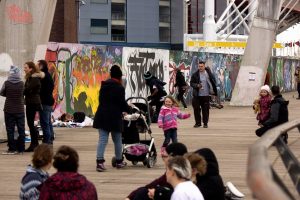
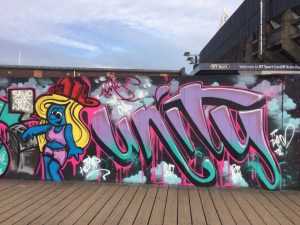
Cardiff’s Millenium Walkway Graffiti Hall of Fame
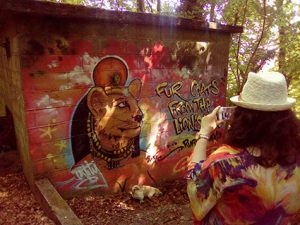
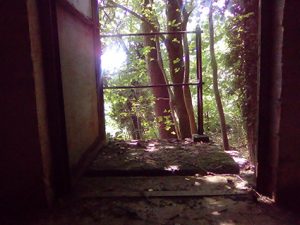 An abandoned building with potential to become a site-specific performance stage was our starting point and we put words on paper, paint on wall and talked about ideas for sound creation.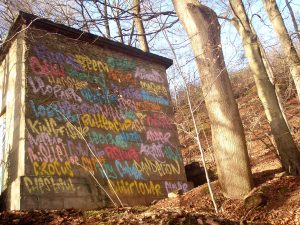
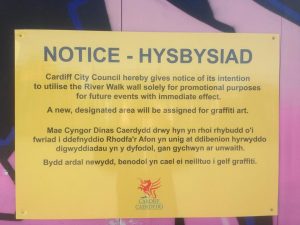

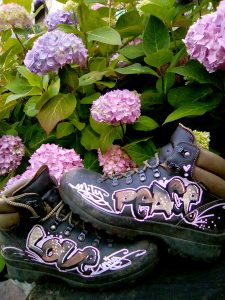
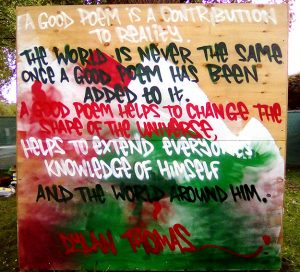
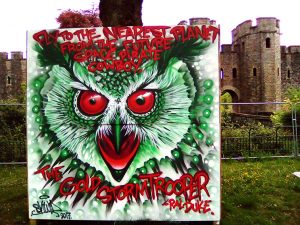
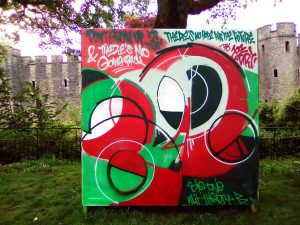
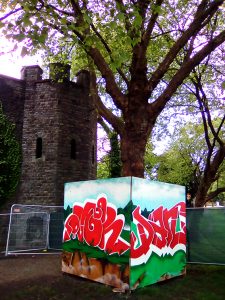
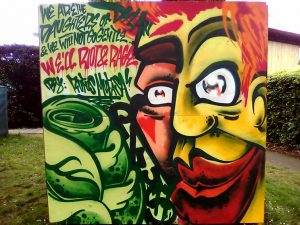
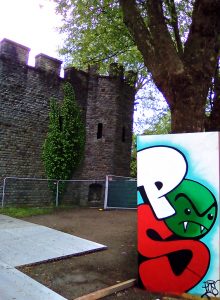
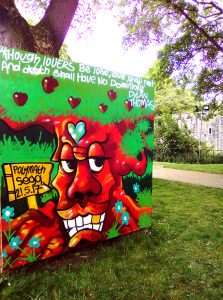
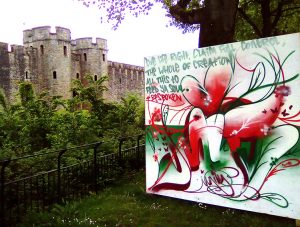
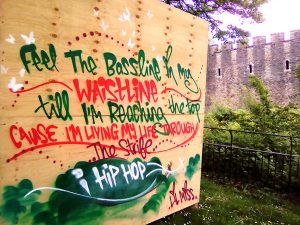
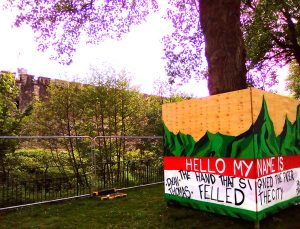
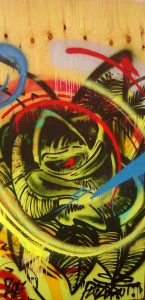
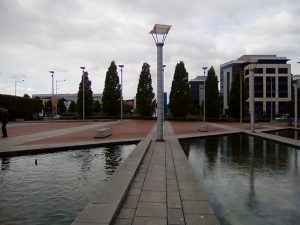
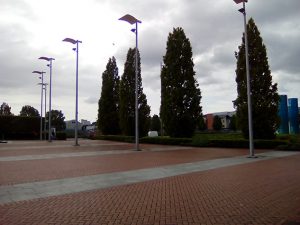
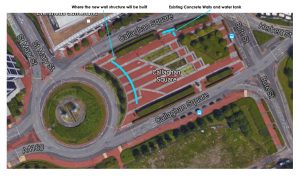
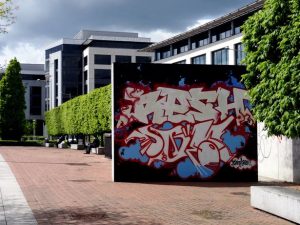
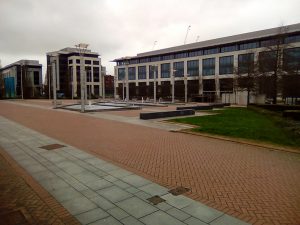 This area – shiny, polished and pristine – is not really used other than as a walk-through, and I believe, by skaters. We will be arranging to have the concrete structure on Callaghan Square painted next month, and hopefully will eventually be able to get an agreement for using this area for our new wall. If not I’ve suggested Bute Park as an alternative so watch this space…